Field
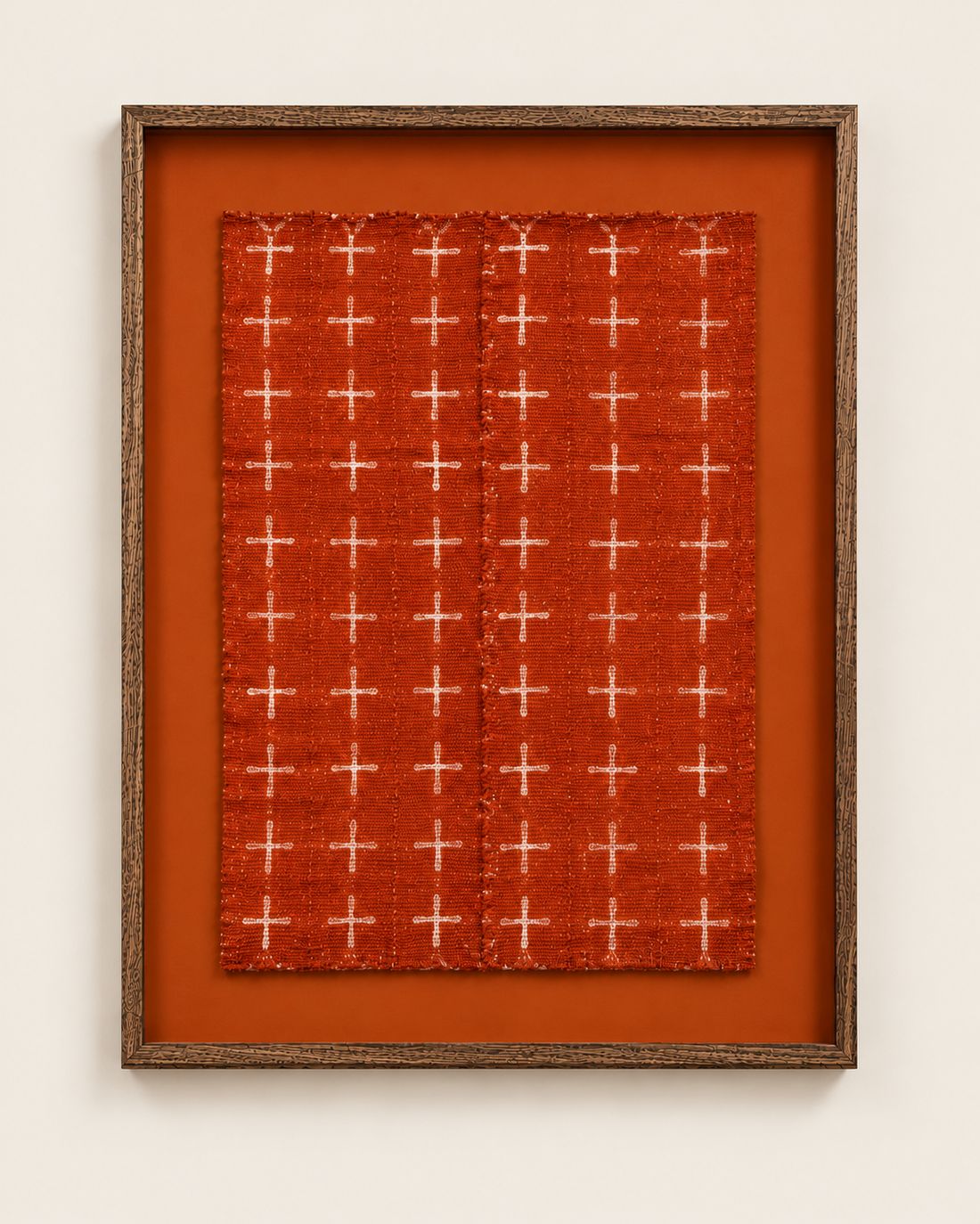
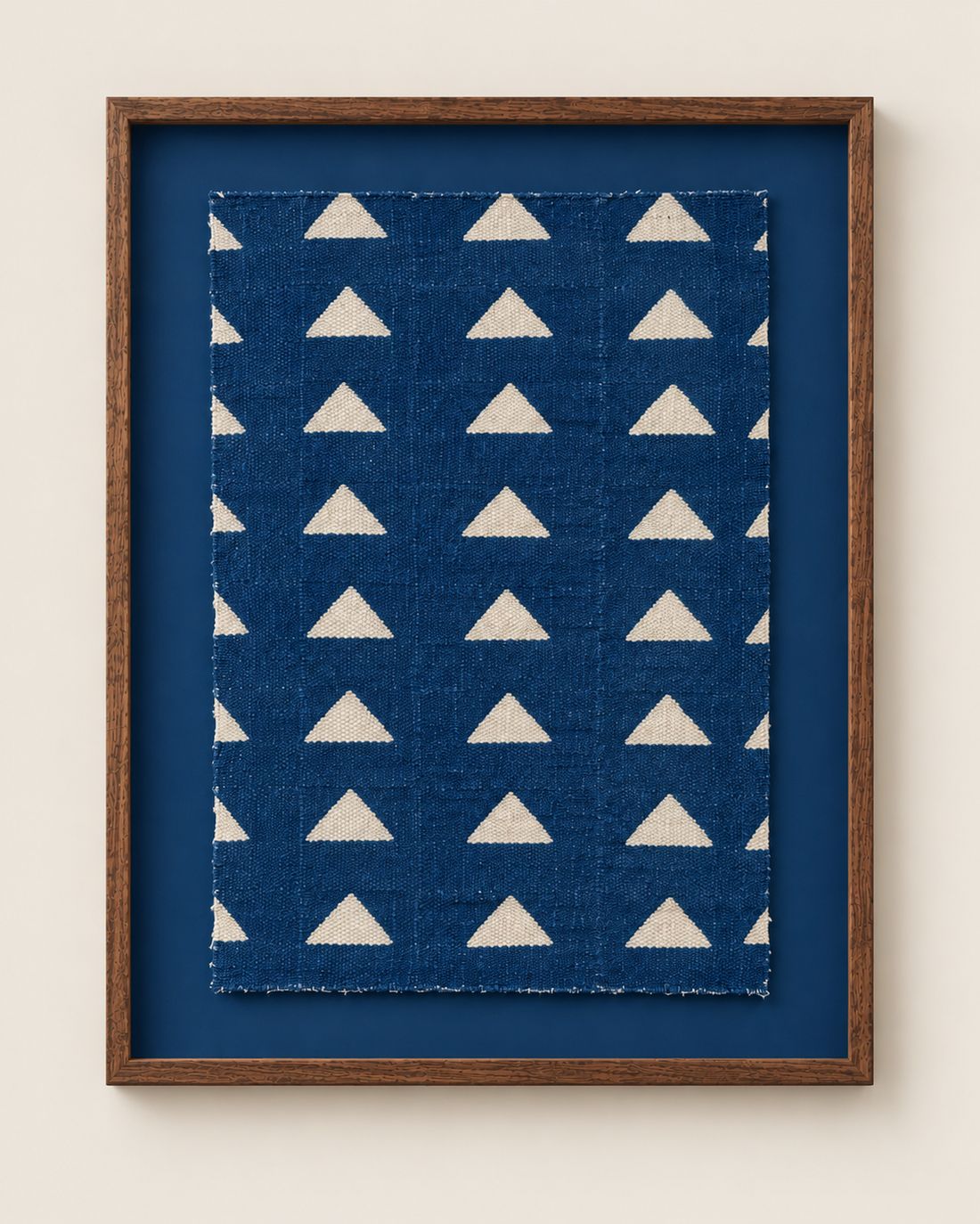
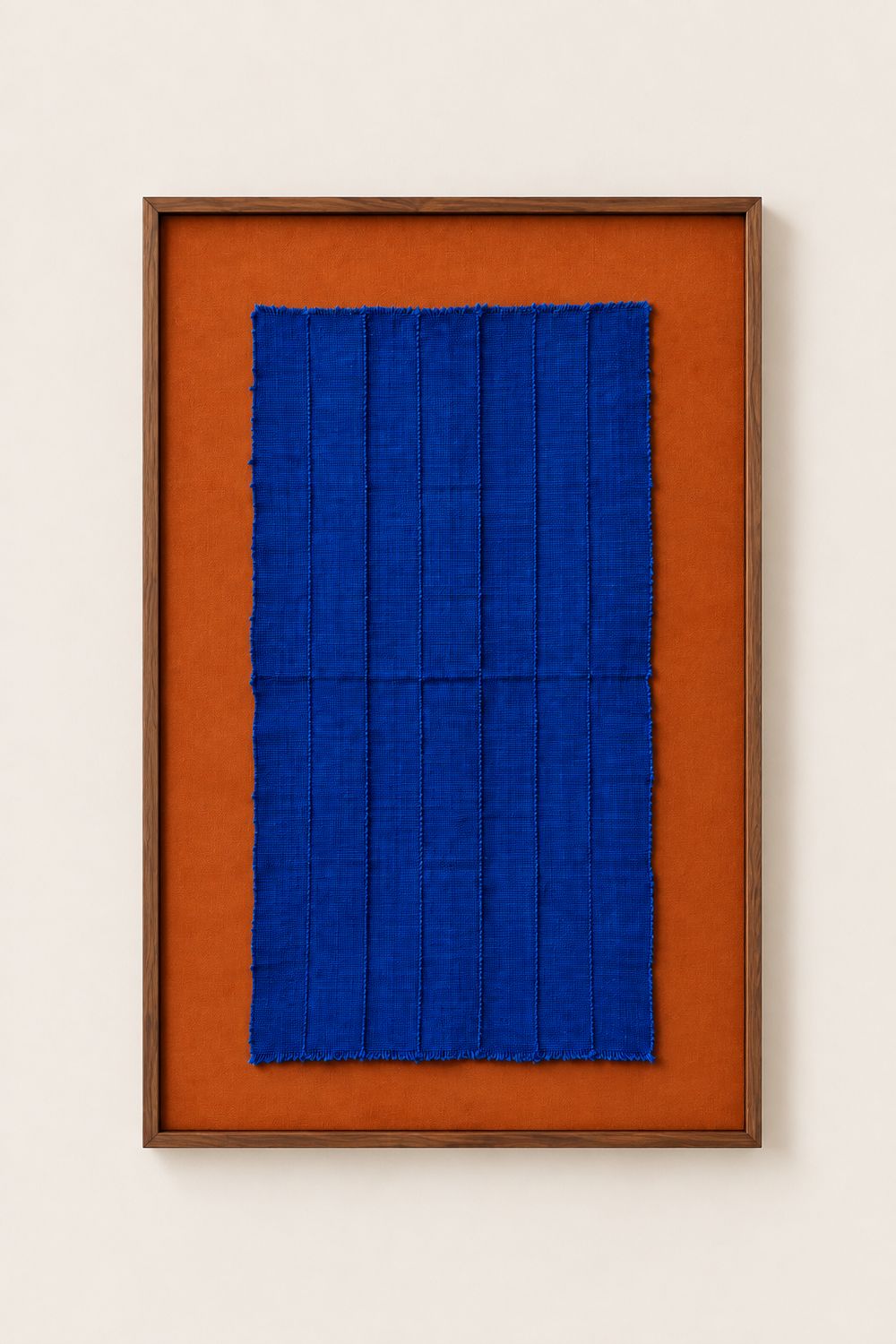
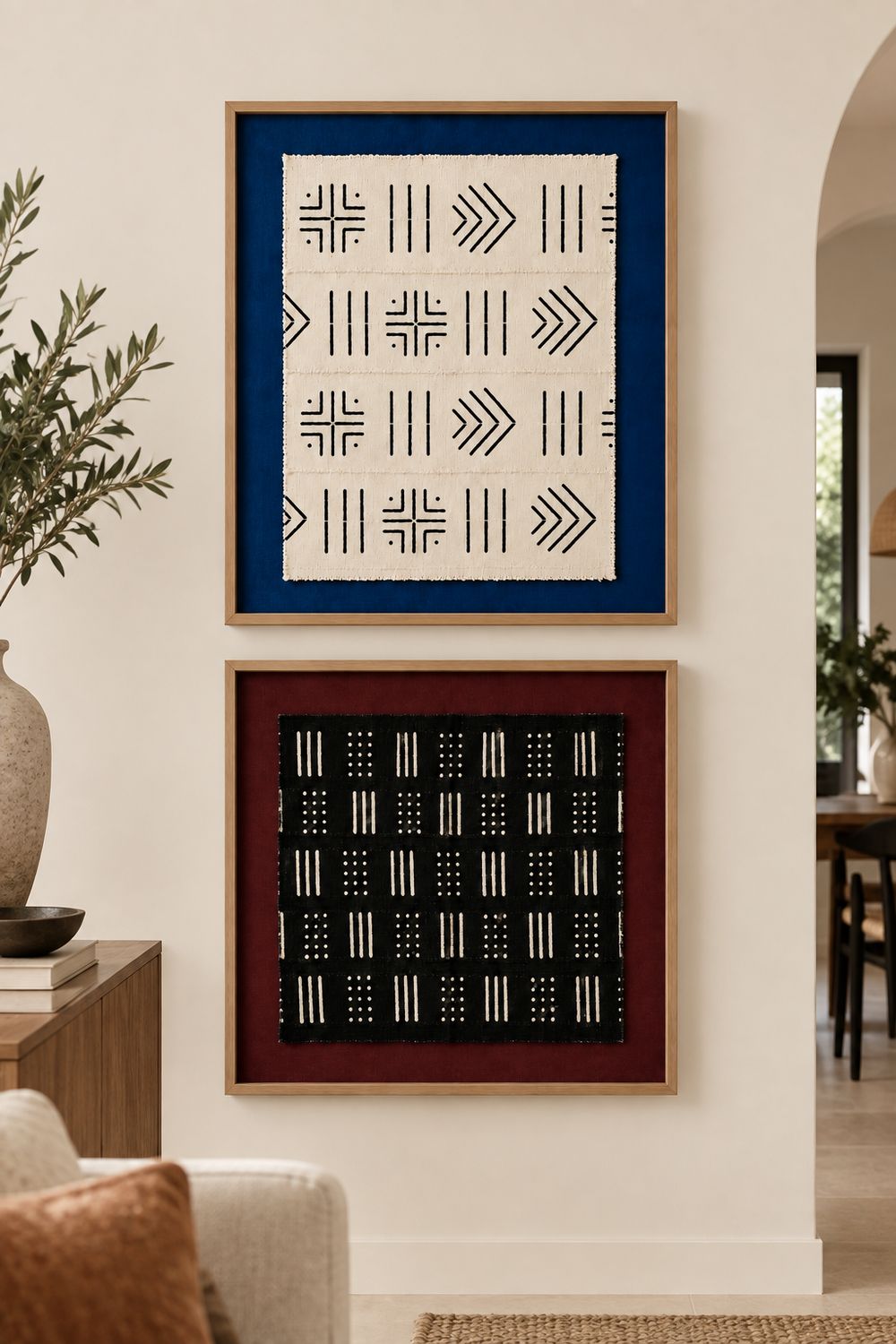
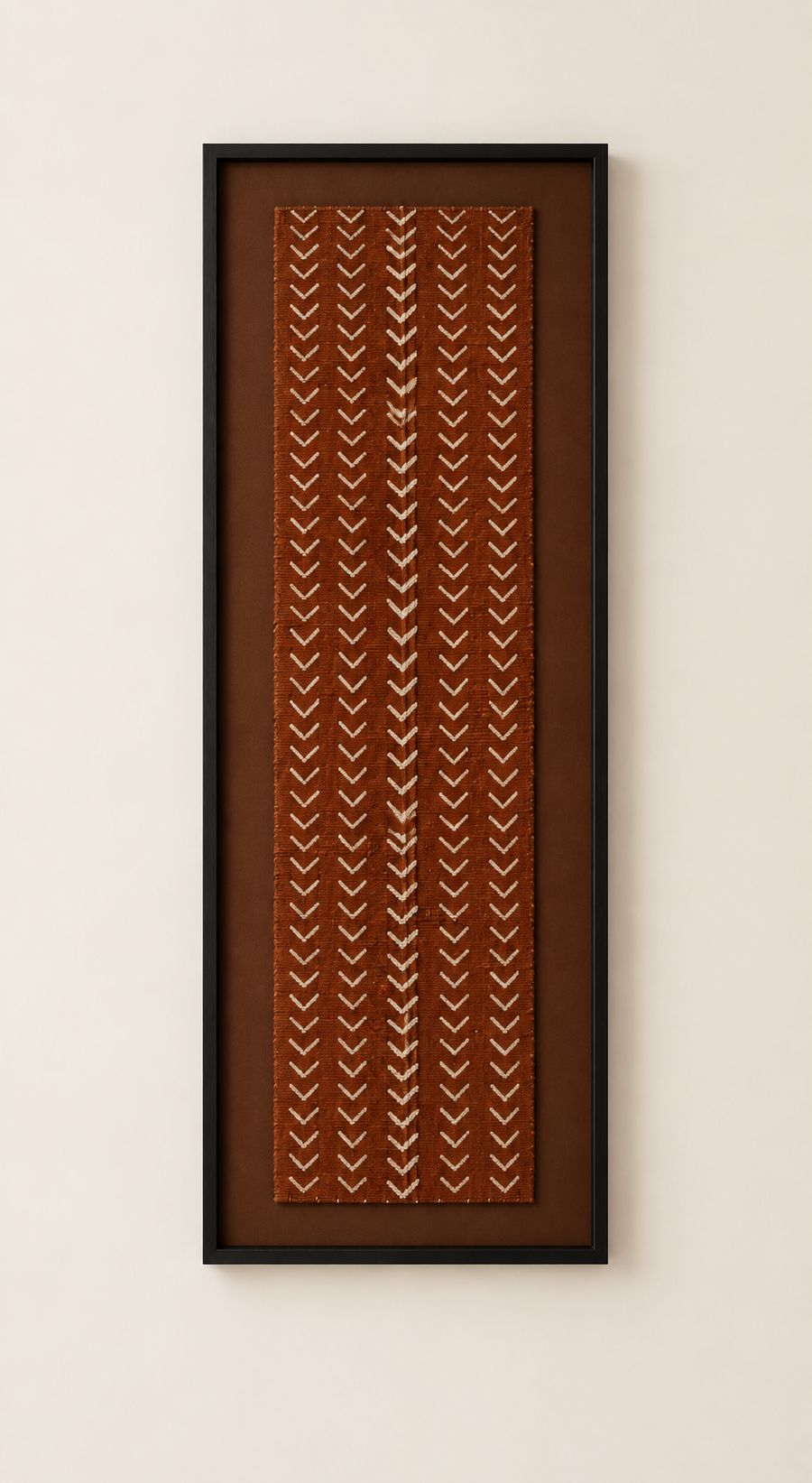
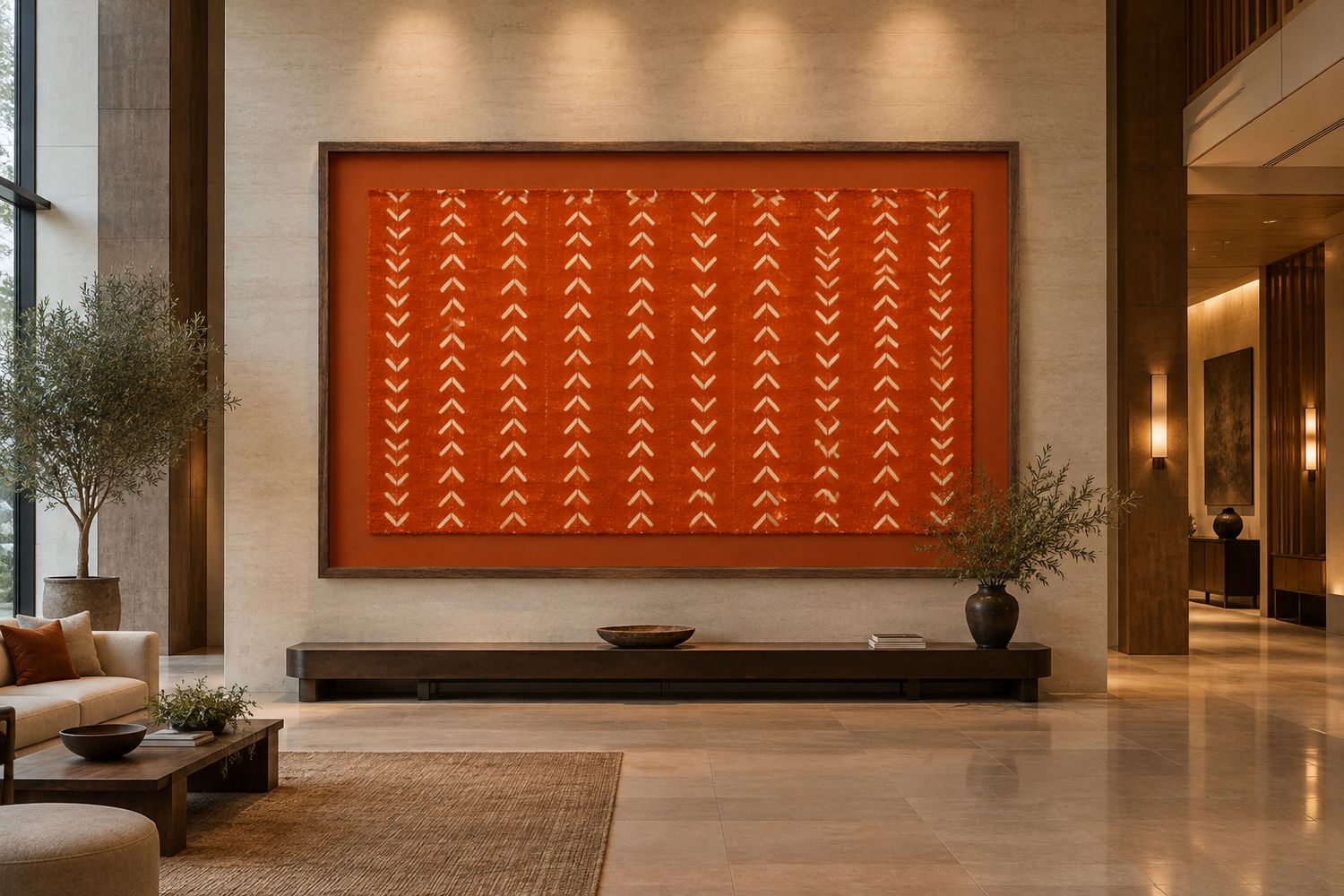
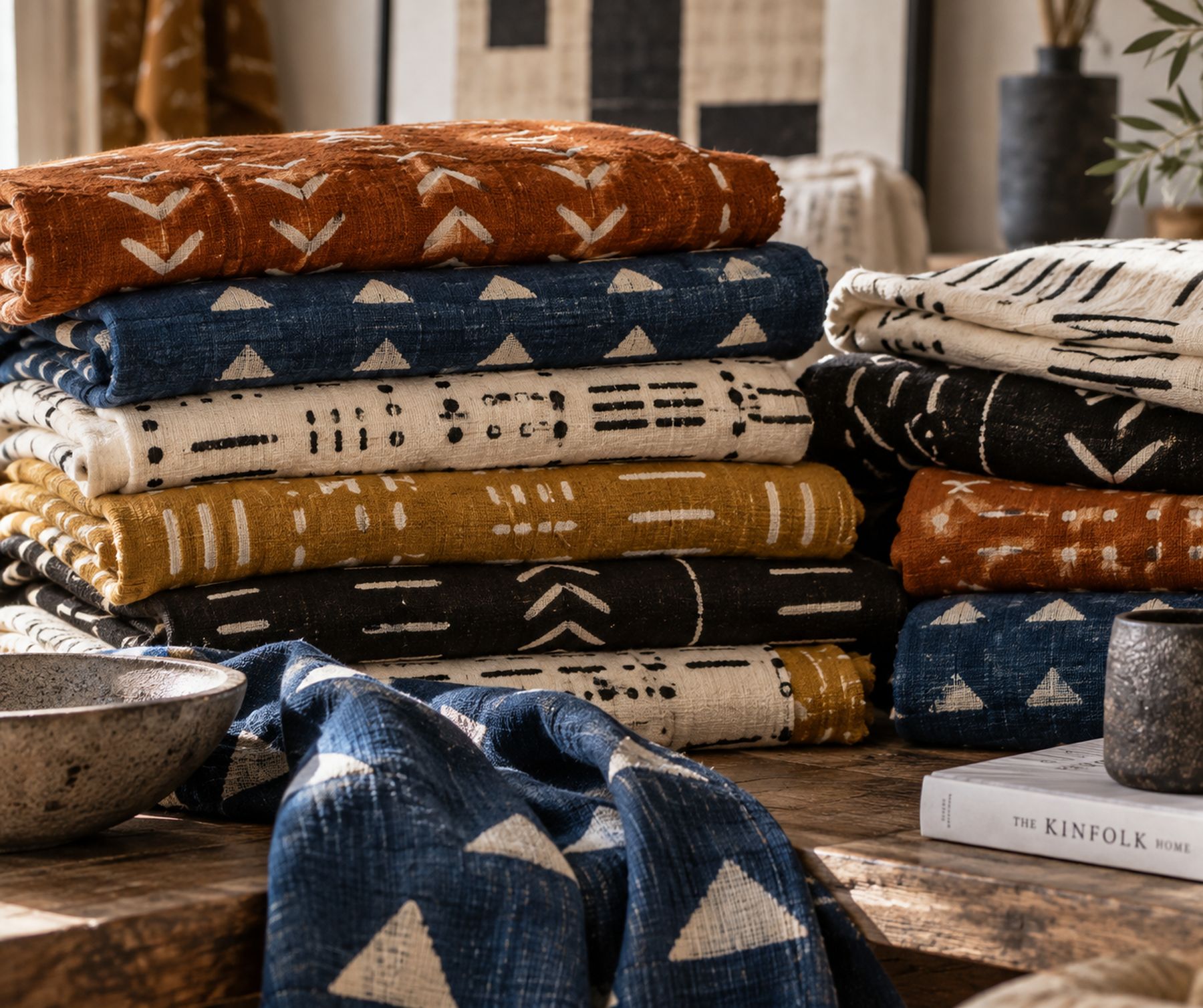
Cloth on a coloured groundThe mount is a saturated colour, tuned to the cloth or set deliberately against it, so the piece reads as one field with the pattern floating in it. The frayed edge becomes the feature. Deep box, unglazed.
Framed textile commissions for lodges, hotels and workplaces.
Hand-dyed West African mud cloth, selected, composed and framed by hand.
Mud cloth is distinctly African.
Rich in texture. Delicate in pattern, earthy in colour, and marked by hand in a language older than writing.
The Muud collection brings that cloth onto contemporary walls.
Three treatments, each a different relationship between cloth and mount.
The mount is a saturated colour, tuned to the cloth or set deliberately against it, so the piece reads as one field with the pattern floating in it. The frayed edge becomes the feature. Deep box, unglazed.
Cloth floated on a linen or bone mount with the frame held back. The quietest of the three.
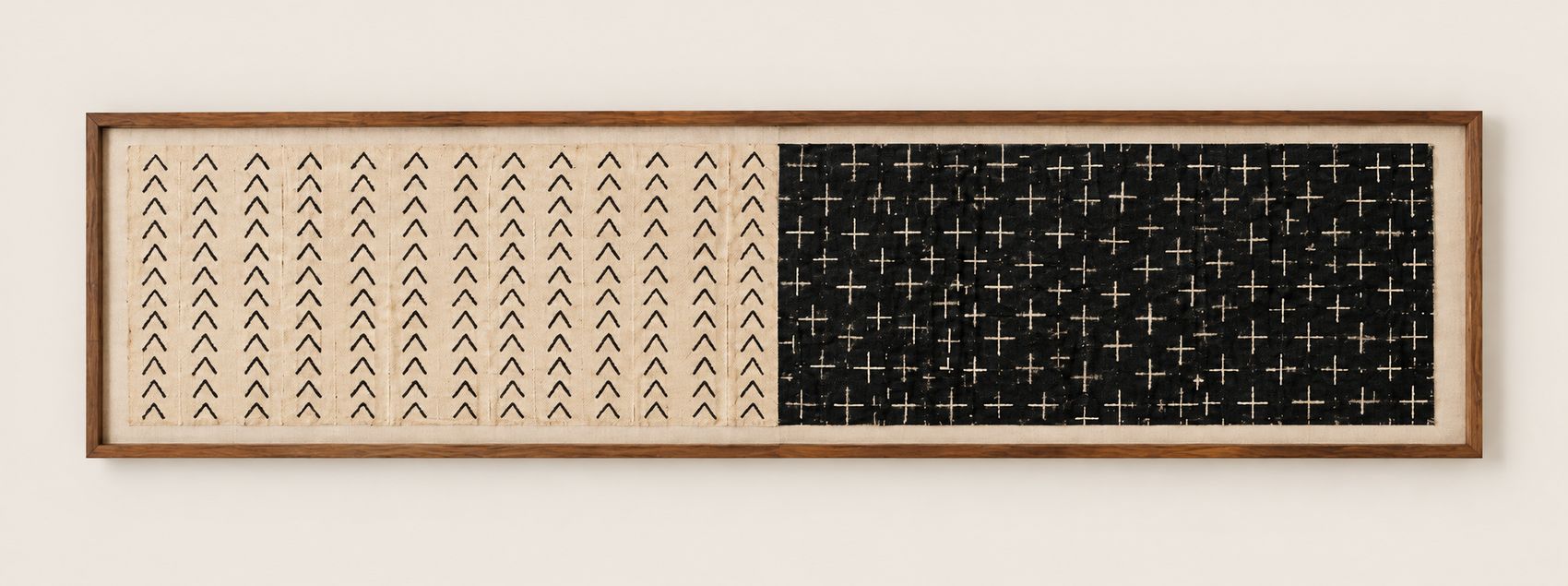
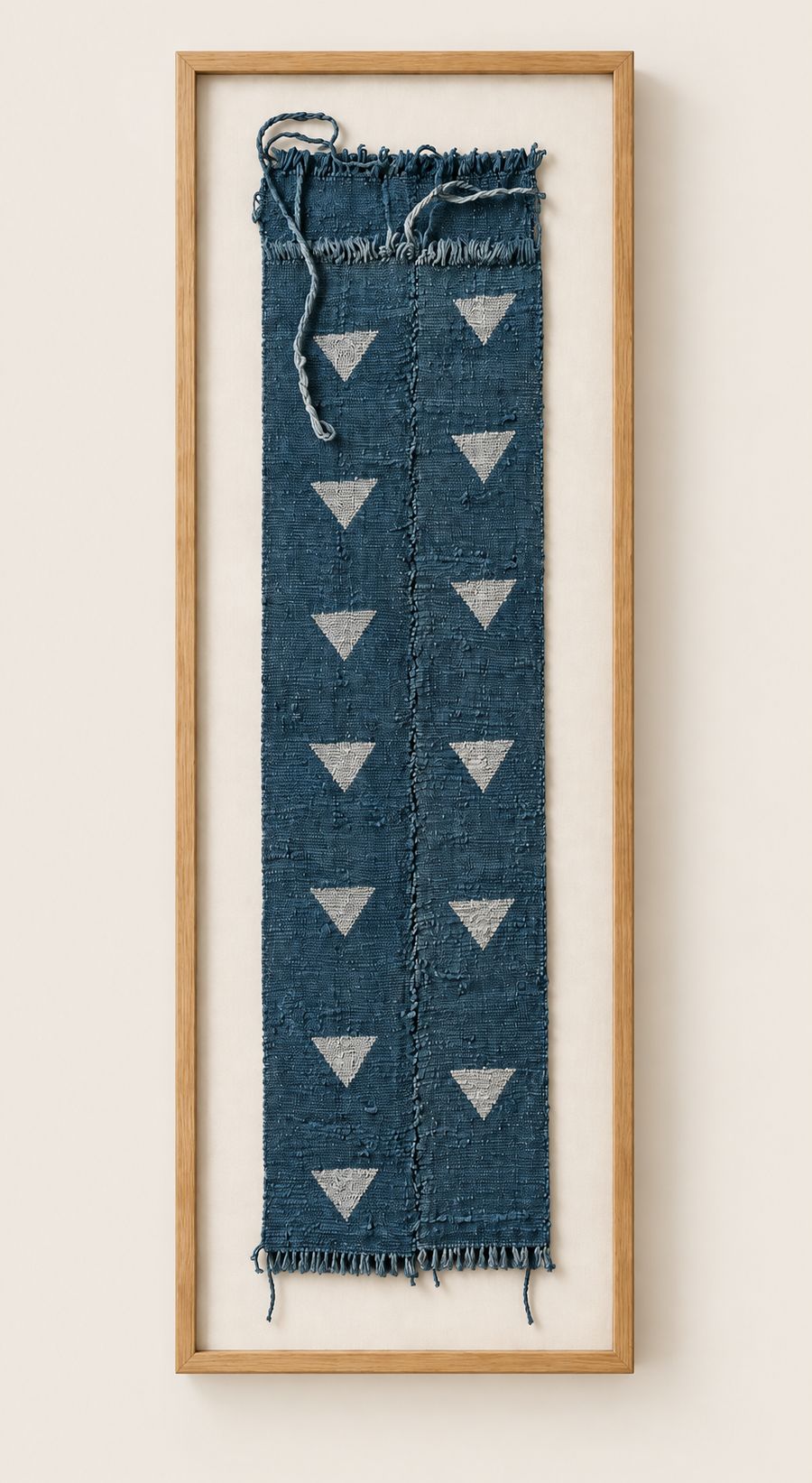
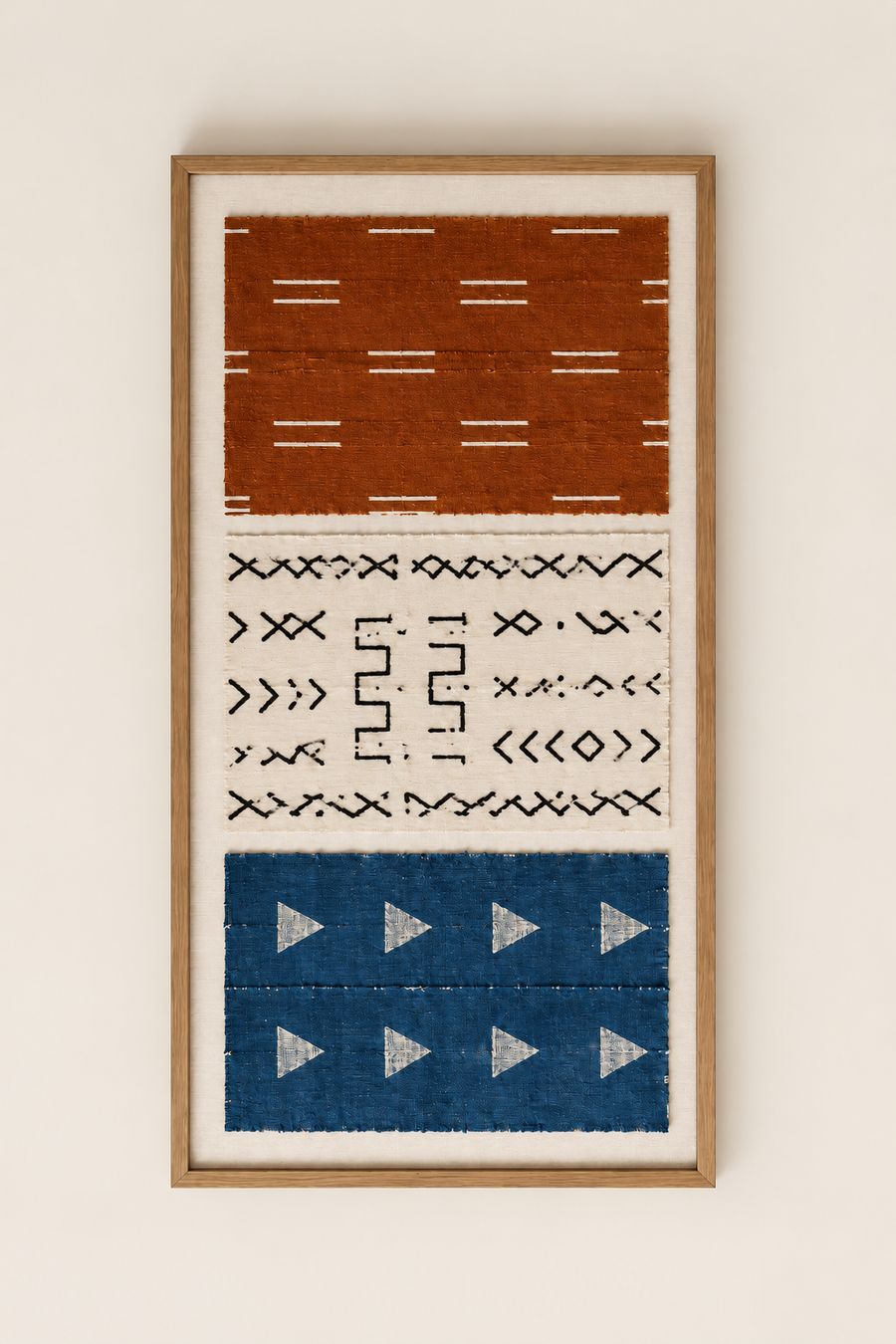
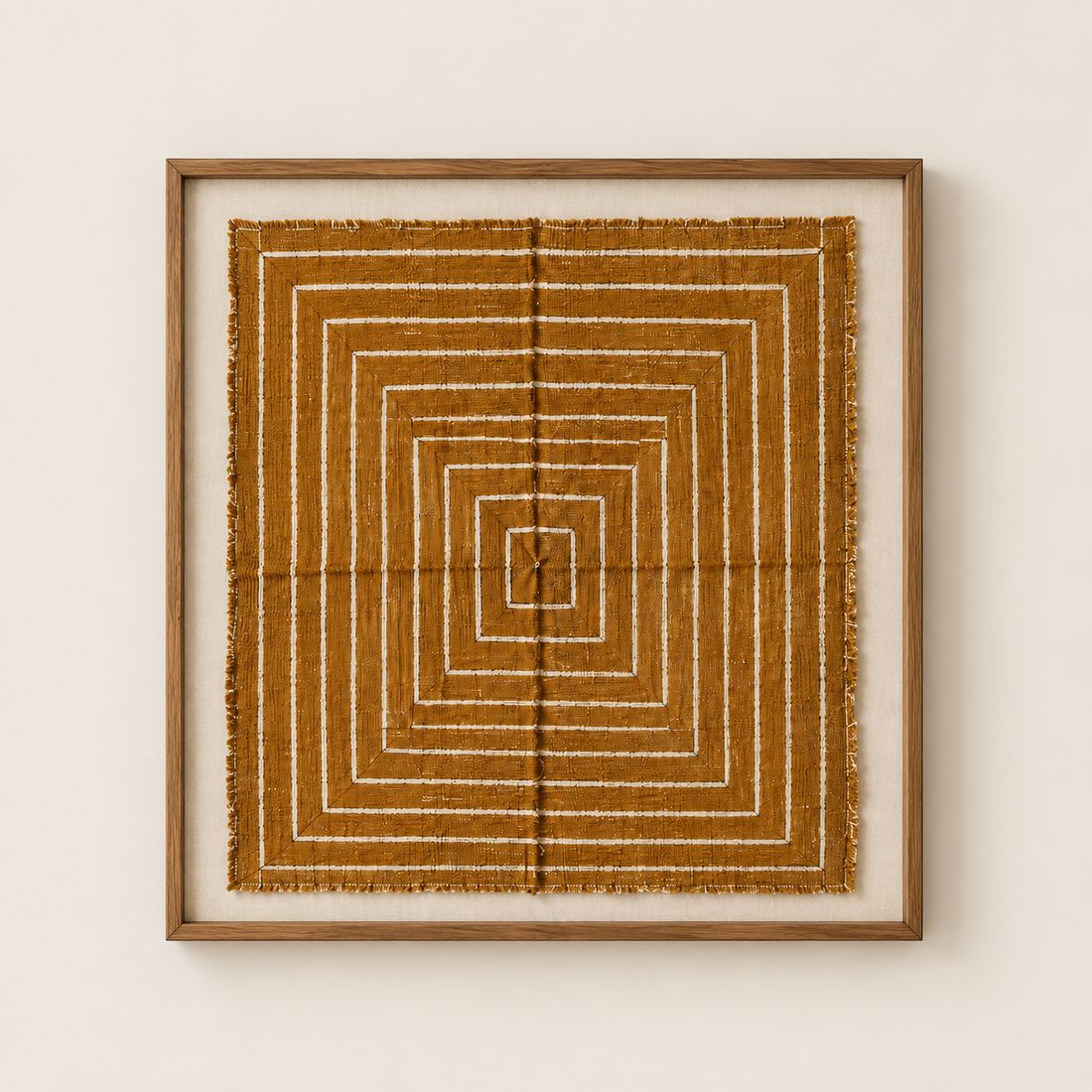
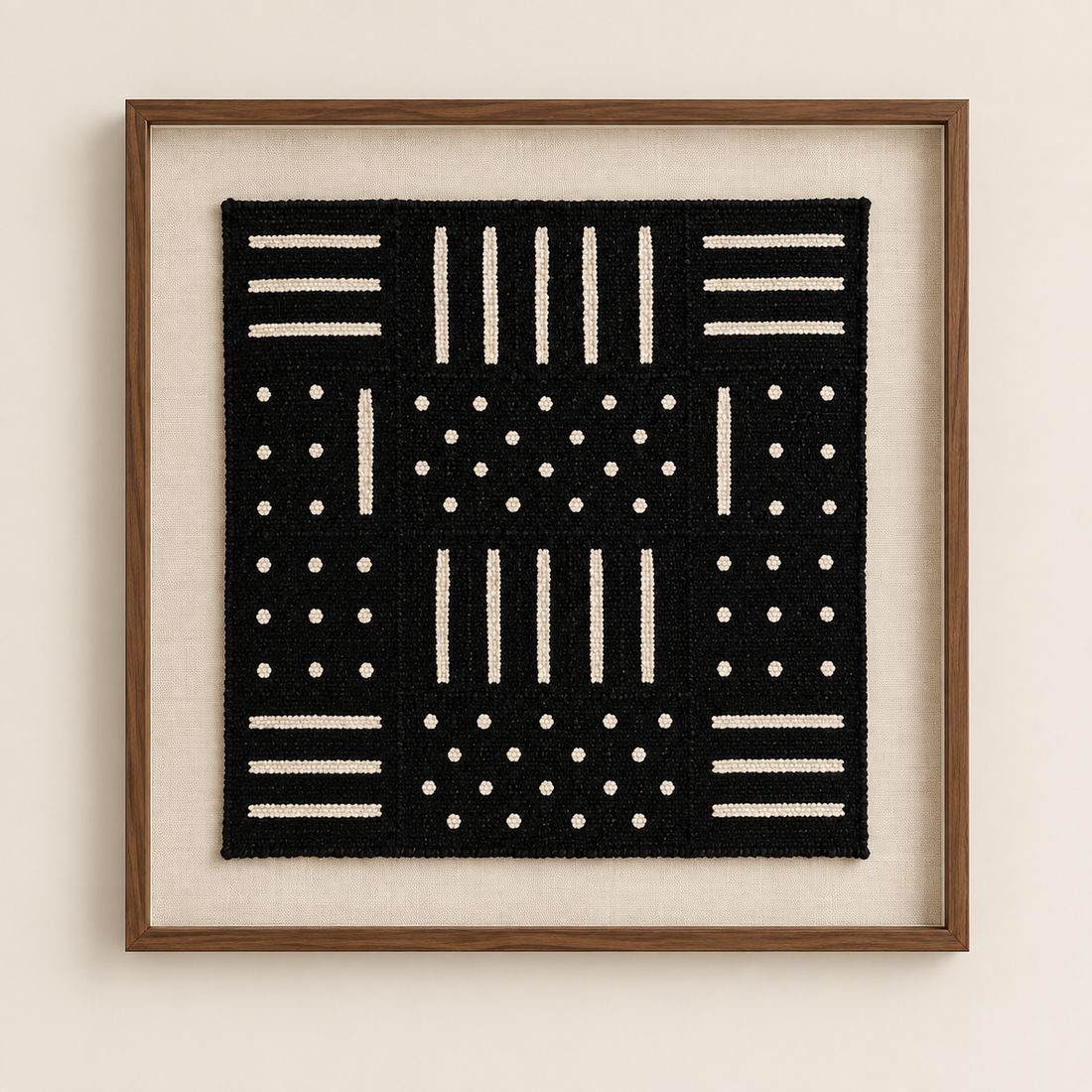
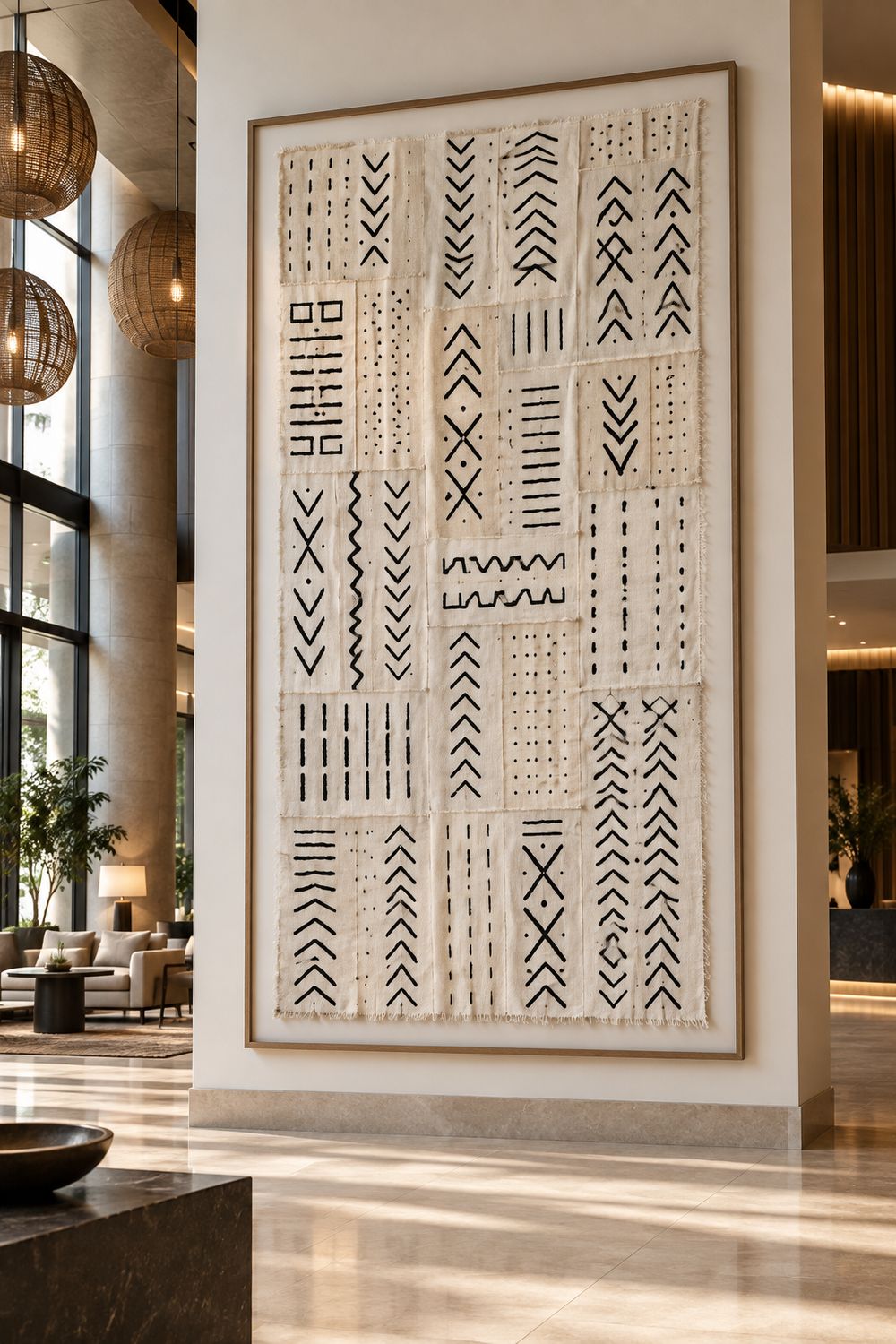
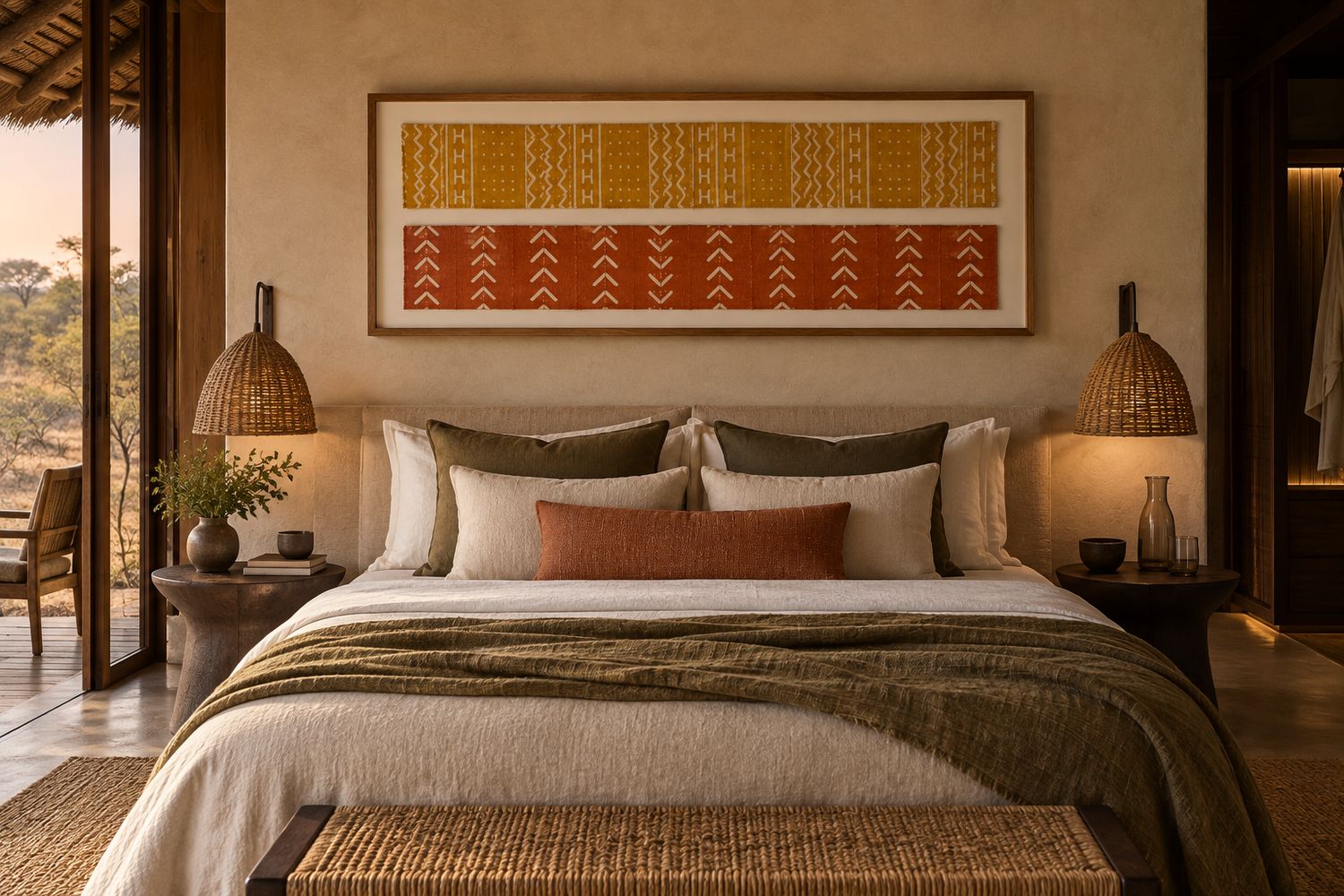
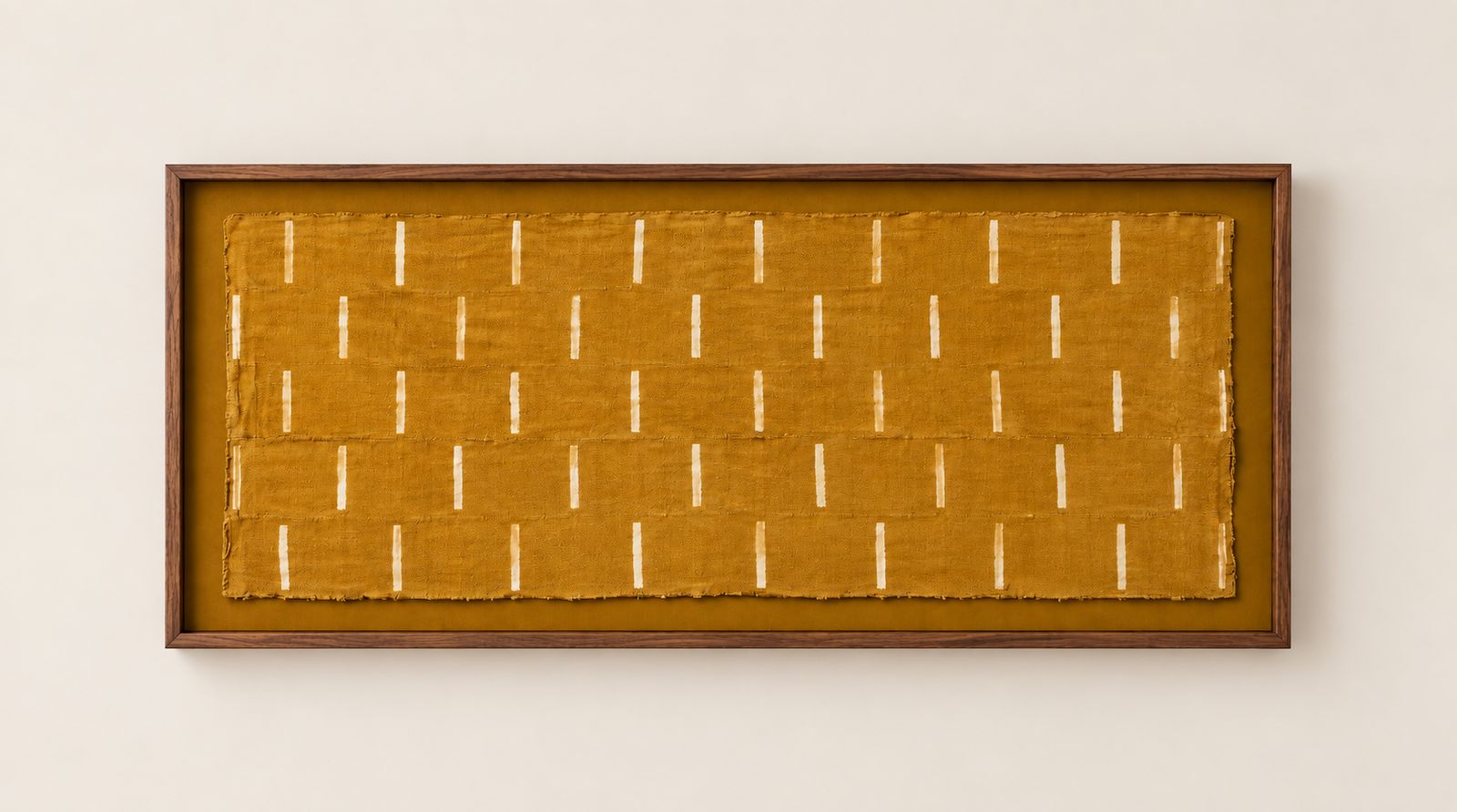
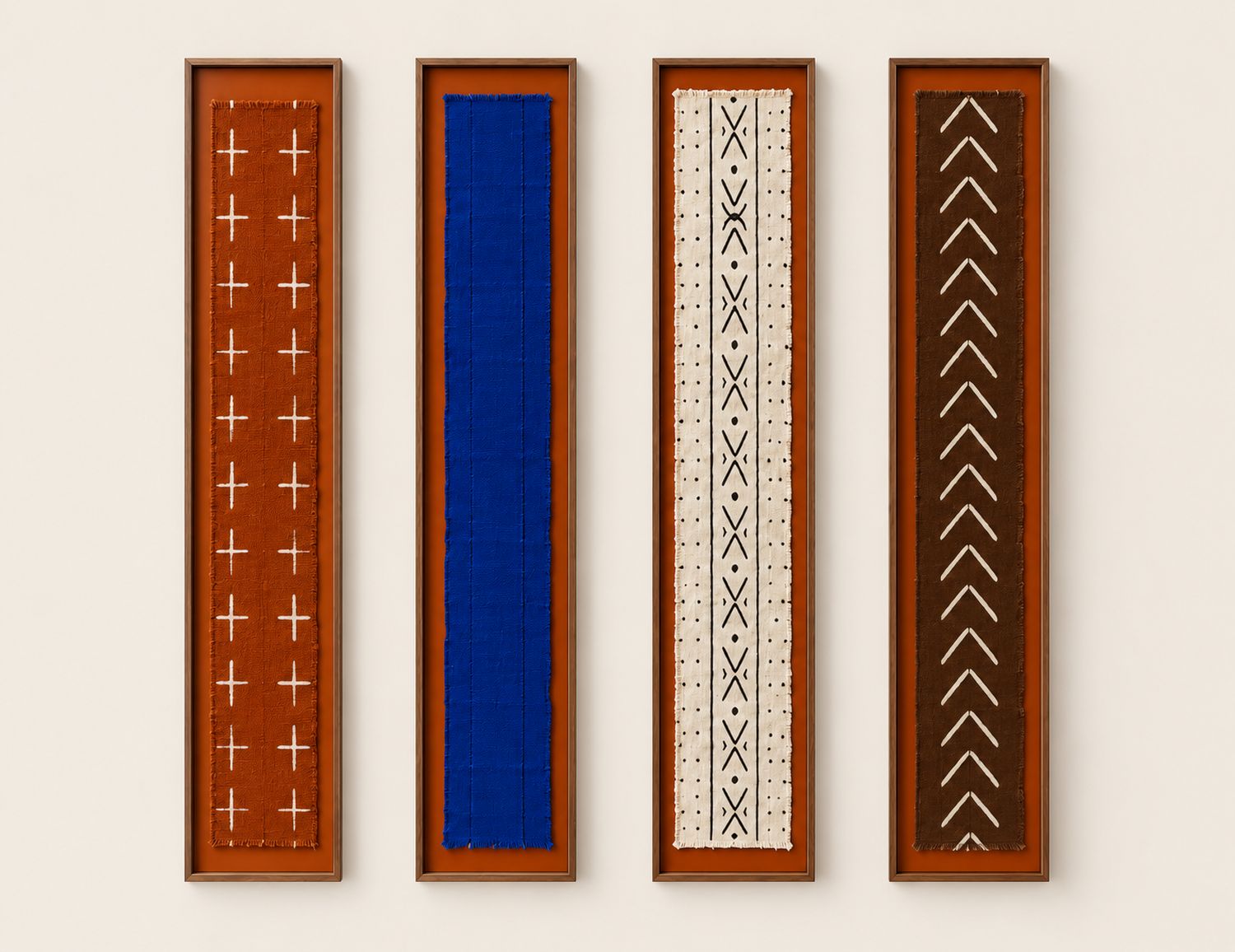
No mount. The cloth fills the frame, usually in the narrow strip proportions it was woven in. Hangs alone or as a set — four panels will carry a corridor.
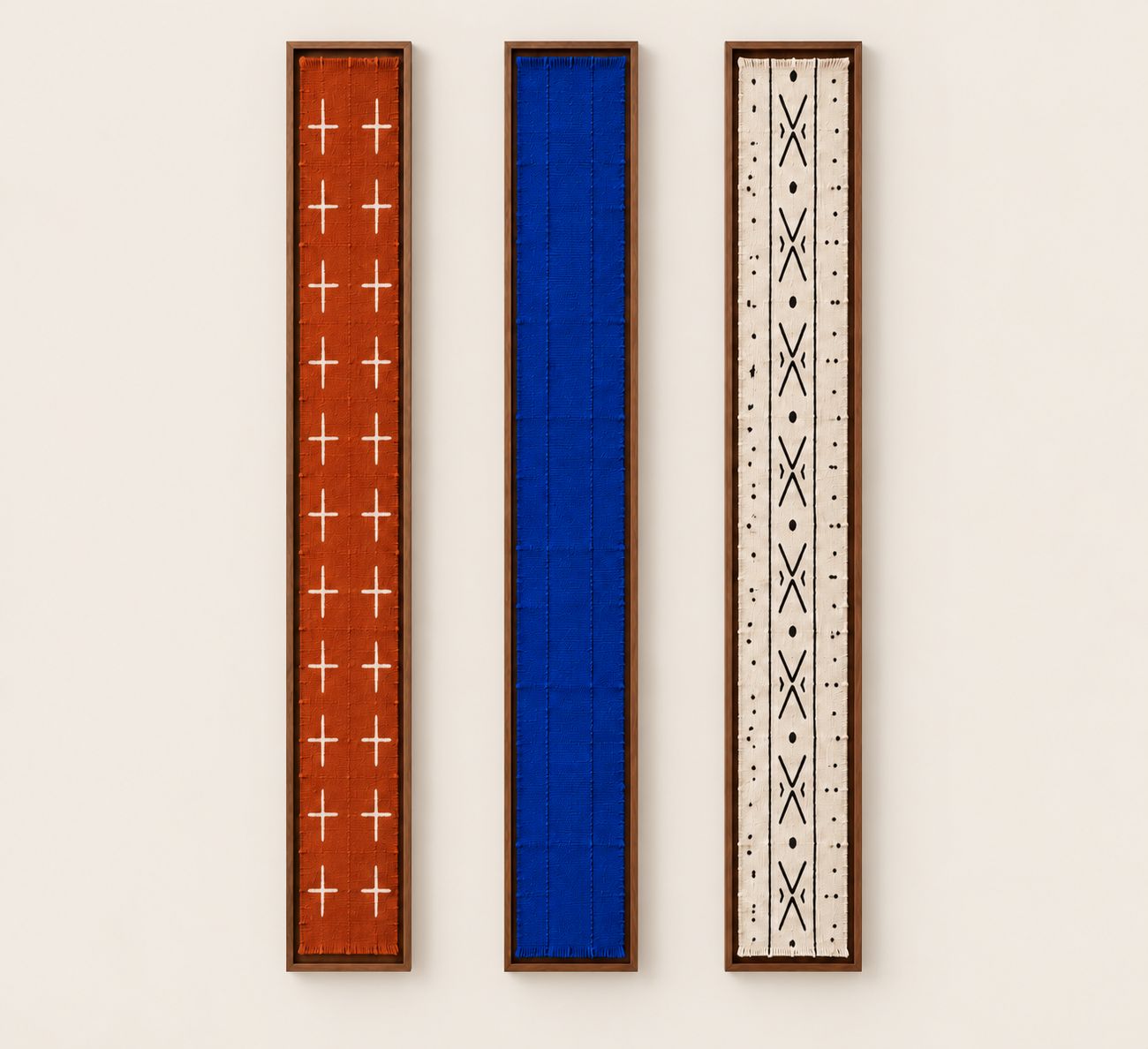
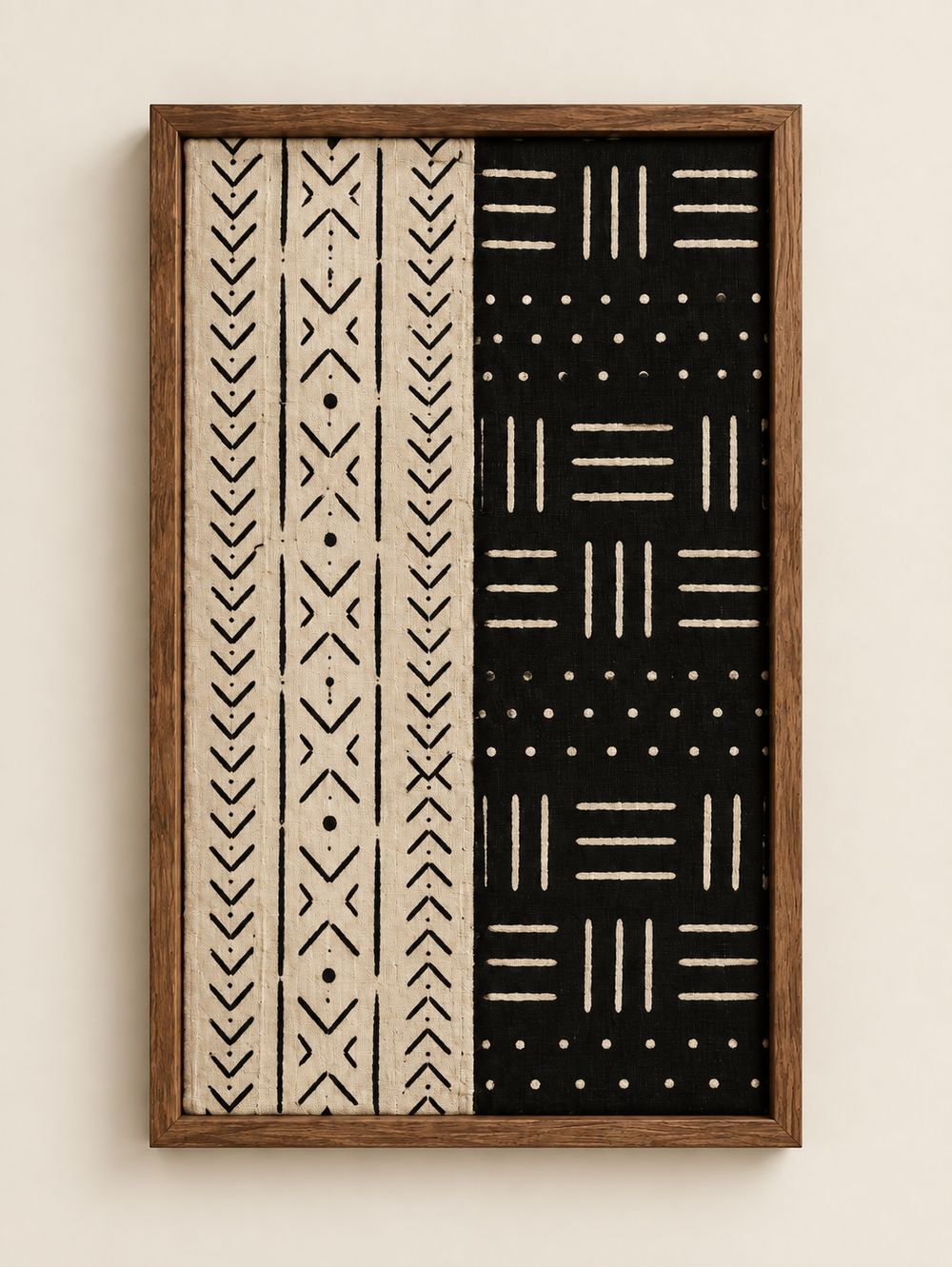
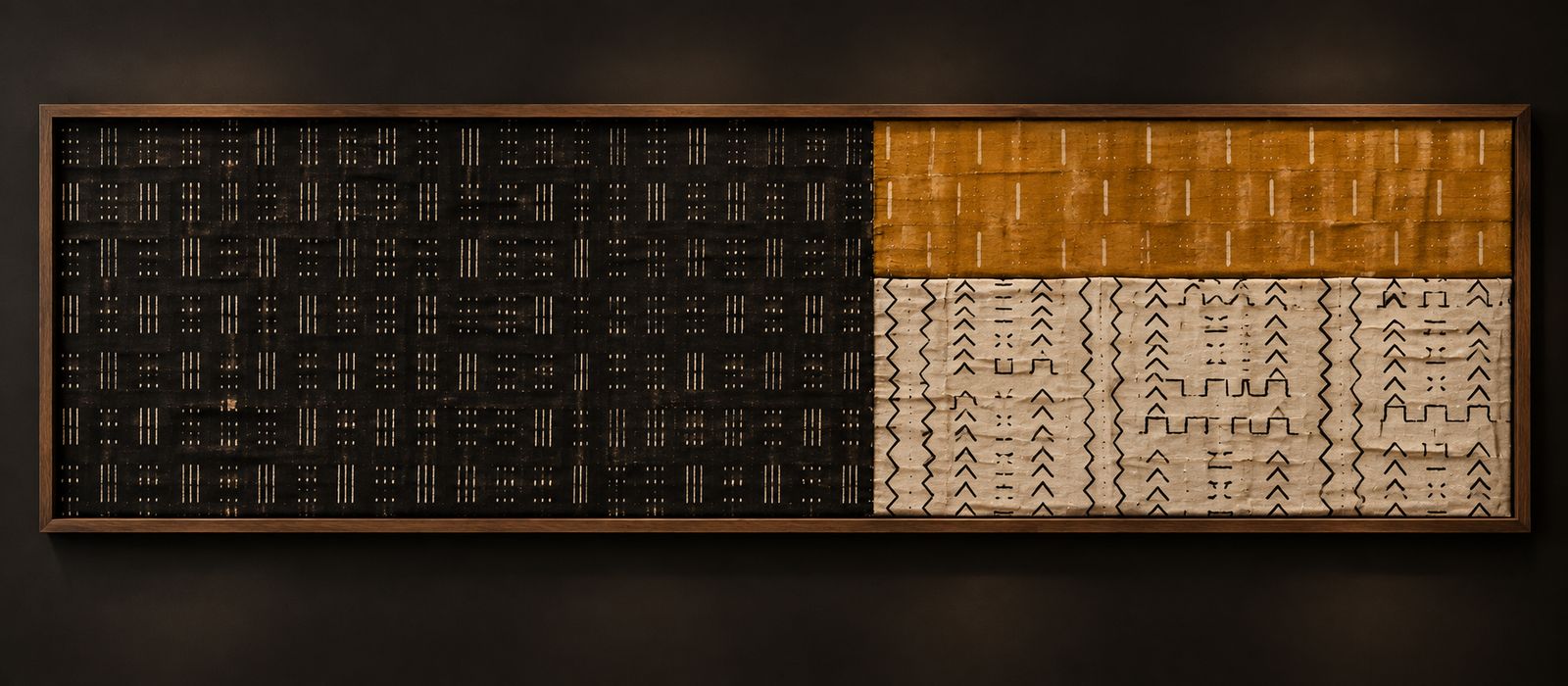
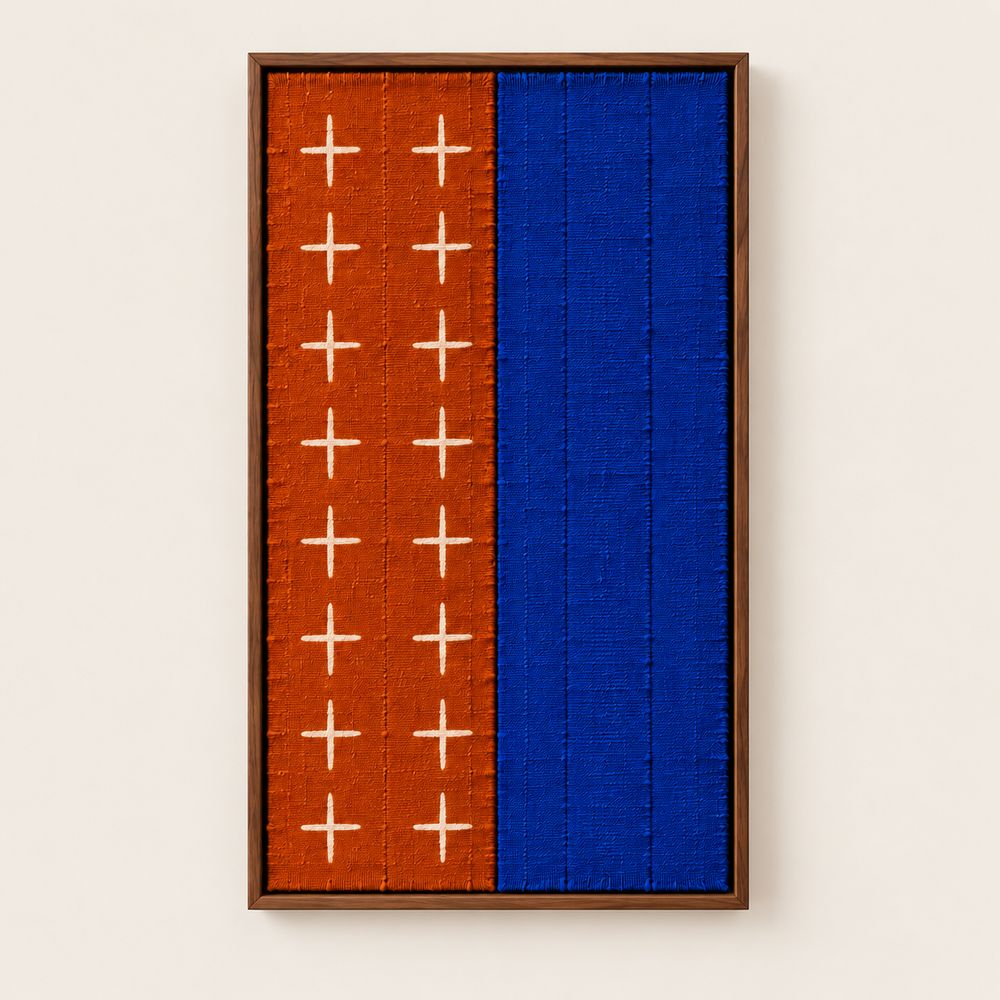
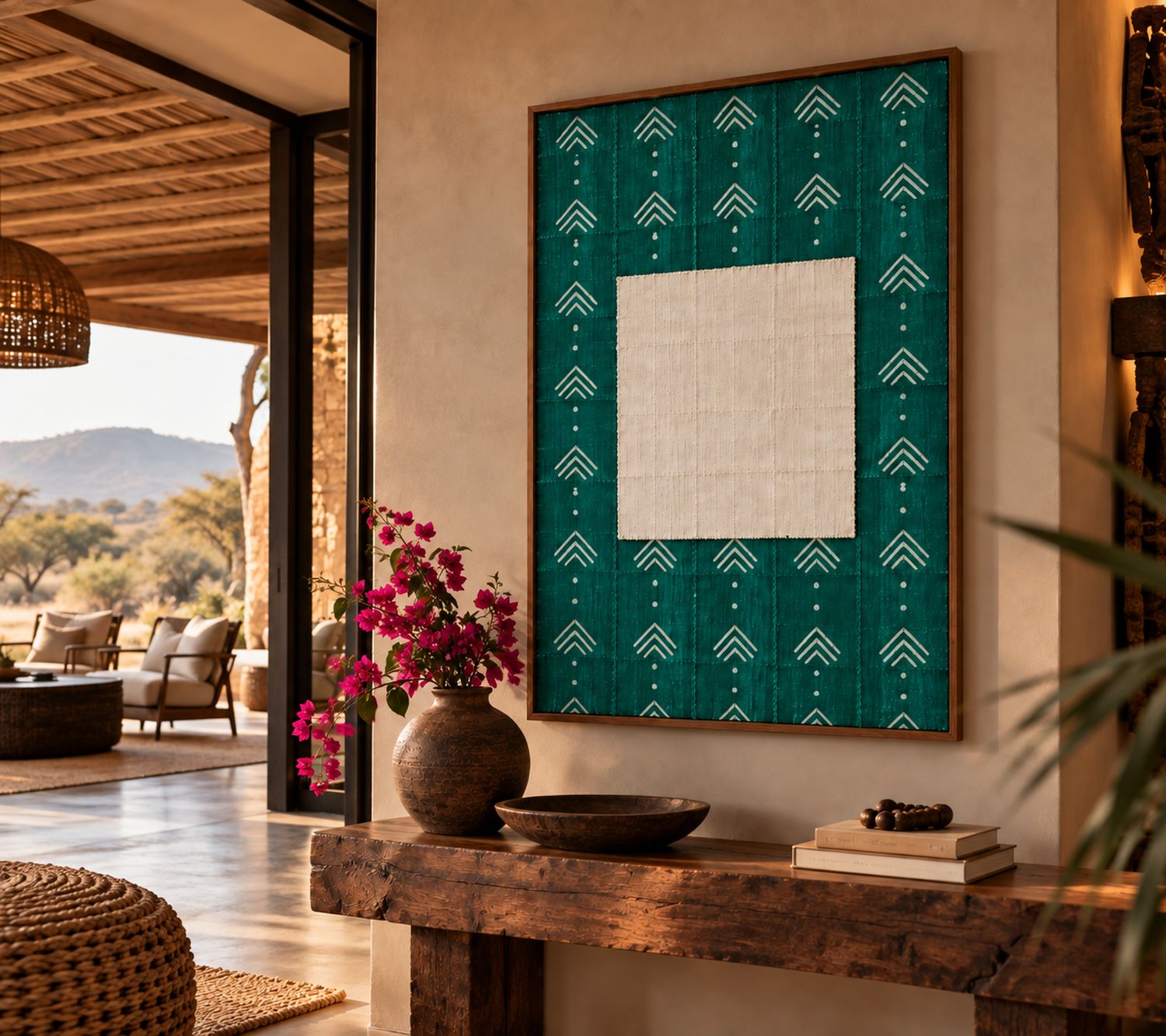
Images shown are concept studies, developed digitally to set out palette, scale and composition. Every finished piece is made by hand to commission, in authentic cloth, at the dimensions of your space.
Around eight weeks from brief to delivery, depending on scale and the number of pieces.
We start with the room. Dimensions, light, materials, and the scheme the piece has to live inside. For a multi-room specification, we work from your finishes board.
Two or three directions, shown in situ against your elevations, with composition and scale resolved before any cloth is cut.
Sourcing to suit the approved direction, then conservation mounting — acid-free, breathable, stitched rather than glued. Unglazed as standard, with glass or acrylic on request for exposed positions.
Crated, insured and delivered installation-ready. Cross-border freight arranged. Hanging available for larger specifications.
Bògòlanfini is a Bamana practice, rooted in Mali and carried through Burkina Faso, Guinea and across the wider Sahel. The cloth is woven in narrow strips, dyed with a bark solution, then painted mark by mark with fermented river mud until the ground turns dark and the pattern is left behind.
It is slow, skilled work, and almost none of it is credited.
Muud currently buys through retail supply. That means we can tell you the region a cloth comes from, but not the name of the person who dyed it. We would rather say that plainly than claim a traceability we do not yet have.
We are working towards direct sourcing, so that makers can be named on the back of the frame and paid at source.

Oliviera is a South African creative with a deep love of textile and bold pattern. Mud cloth became an obsession after he used it as the decoration for his own wedding, and it has stayed one since.
Paired with an eye for interior design, he now brings mud cloth to spaces that dare to be bold — spaces that want to be noticed, that create a feeling. A muud.
Tell us about the property, the scale, and when you need it. We will come back with a direction and a price.